

How to Choose the Best Play Kitchen for Toddlers
Kids Blooms TeamA play kitchen gives toddlers and young children a place to explore cooking routines, imaginative role-play, and everyday household activities. The best play kitchen for toddlers is not simply the largest or most realistic-looking option. It should fit the child’s age, available space, interests, and ability to use its features comfortably.
Parents can choose from simple pretend kitchens and larger interactive sets with accessories, storage, lights, sounds, and pretend water features. This guide explains the most useful points to compare before choosing one.
What should you look for in a play kitchen for toddlers?
Start with age guidance, stability, available play space, and the activities your child enjoys. A useful play kitchen should offer several ways to interact without making the controls or accessories difficult to reach.
| Feature to compare | Why it matters |
|---|---|
| Manufacturer age guidance | Helps parents choose age-appropriate features and accessories |
| Overall size | Ensures the kitchen fits the intended play area |
| Accessible controls | Makes doors, knobs, shelves, and play areas easier to use |
| Accessories | Adds variety to cooking, serving, and restaurant games |
| Storage | Provides a place for pretend food, cookware, and utensils |
| Lights and sounds | Adds interactive feedback to pretend-cooking activities |
| Assembly requirements | Helps adults plan the time and tools needed before play begins |
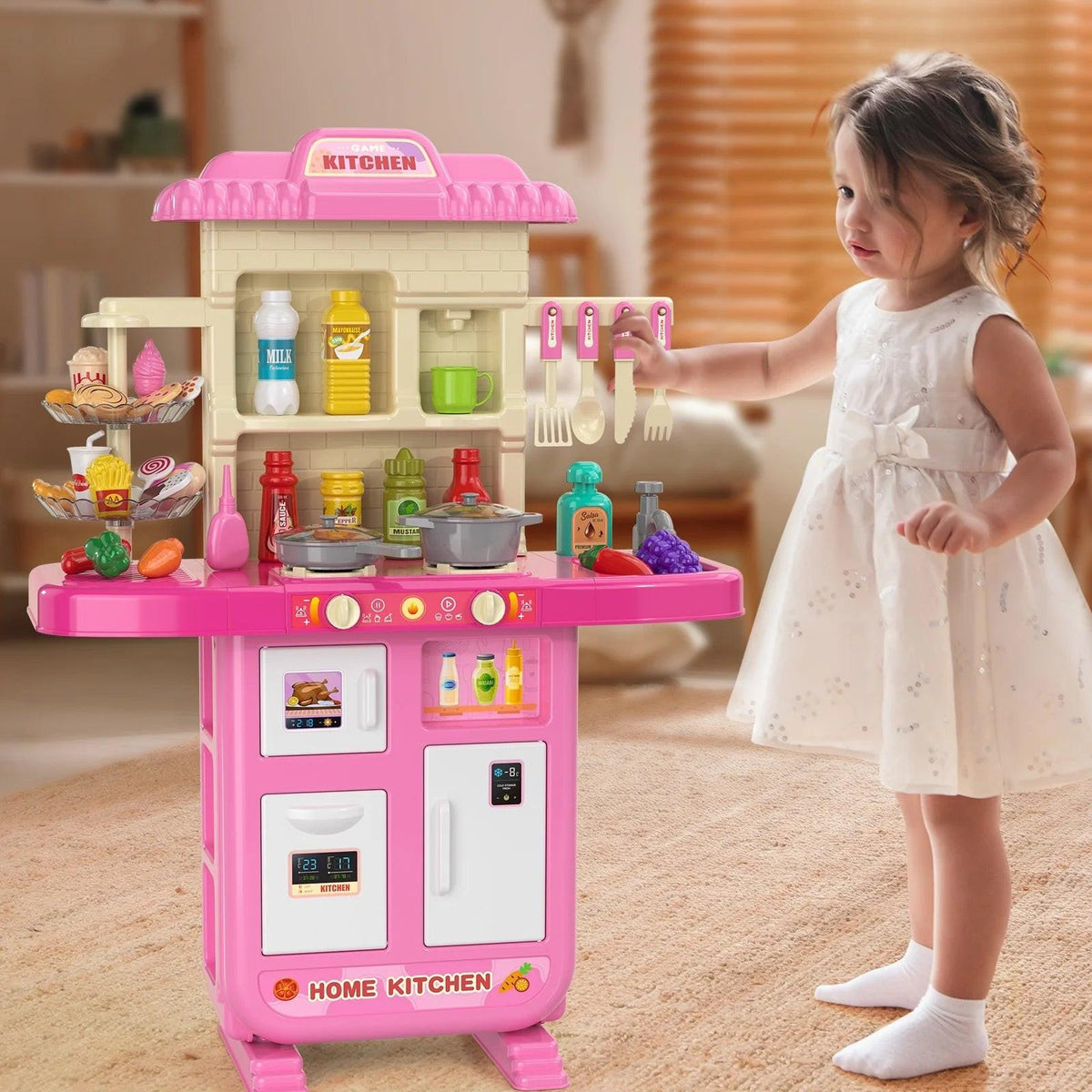
Which play kitchen accessories are useful?
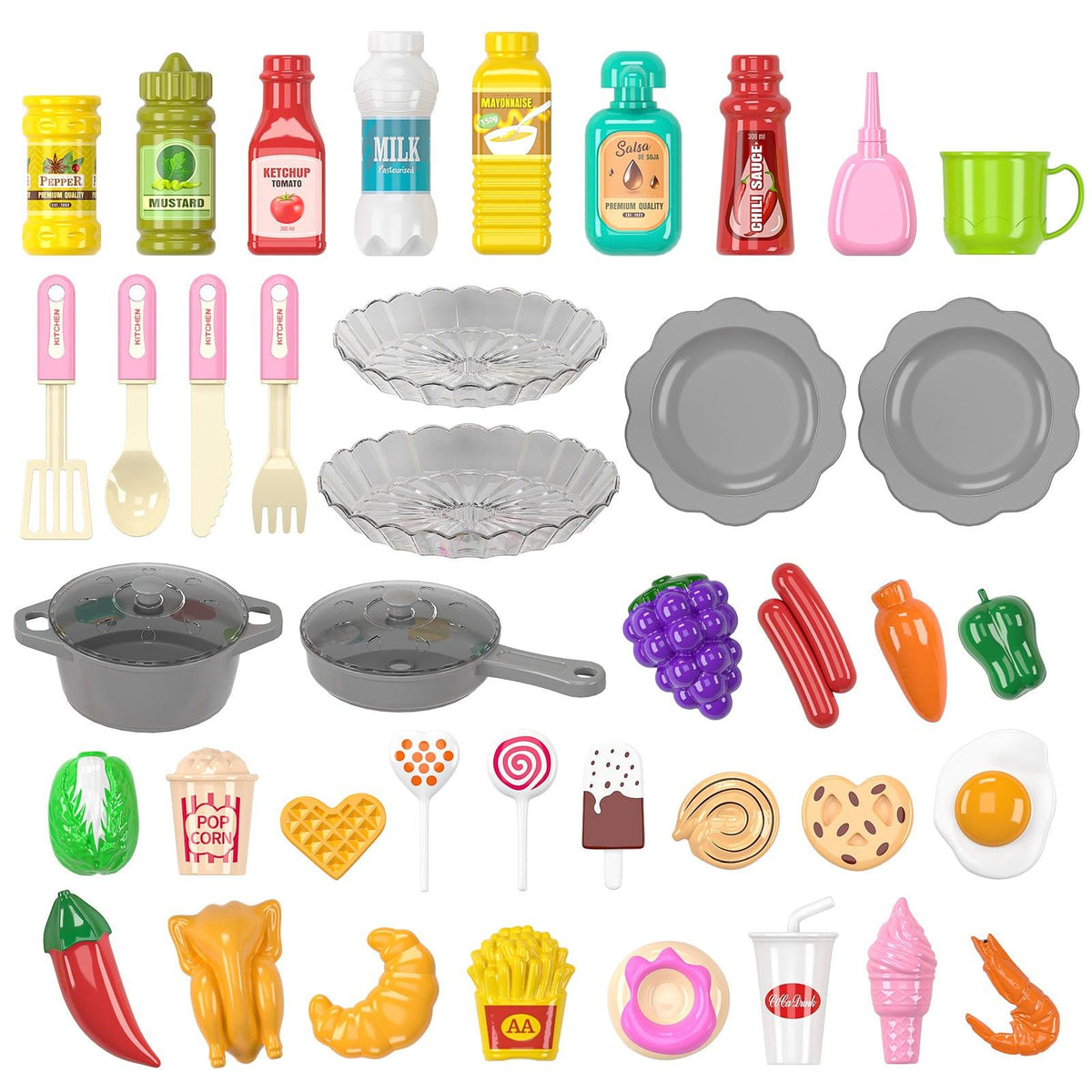
Accessories give children more ways to build their own pretend-play stories. Pots, pans, plates, utensils, pretend food, and serving pieces can support activities such as preparing a meal, running a cafe, organizing a kitchen, or serving family members and stuffed animals.
More pieces are not always better. Parents should check that the accessories are suitable for the child’s age and easy to store when playtime is finished. Review the current product images because the accessories included with a particular set can change.
Is a play kitchen with a pretend water feature worth considering?
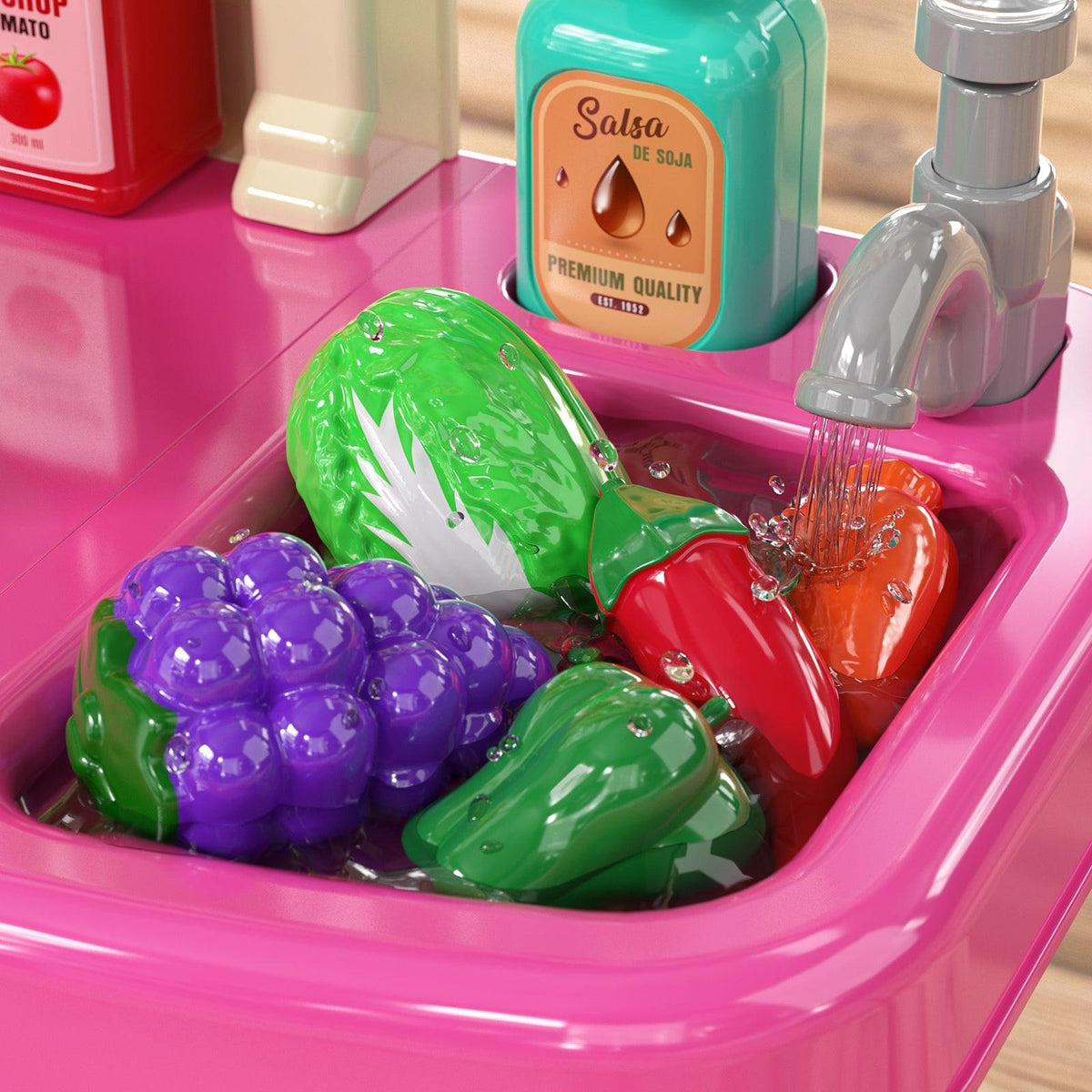
A pretend water feature can add washing and cleaning activities to kitchen role-play. Children may pretend to rinse food, wash dishes, or clean the kitchen after serving a meal.
The featured Kids Blooms play kitchen includes a pretend running-water feature. Adults should follow the supplied instructions for setup, water use, draining, and cleaning. Children should be supervised whenever water is used.
Do lights and sounds improve pretend play?
Lights and sounds can make pretend appliances more engaging by giving children a response when they turn a knob or use a cooking feature. These effects can become part of a longer play sequence: preparing pretend food, using the stove, serving a meal, and cleaning afterward.
The Pink Pretend Play Kitchen at Kids Blooms includes light and sound effects, a pretend water feature, kitchen accessories, and storage and role-play areas. Review the current product page and images for the features and accessories included with the selected set.
What age is the featured play kitchen suitable for?
The featured Kids Blooms play kitchen is recommended for children ages 3 and up. Adult assembly and supervision are required. The set contains small parts and should be kept away from children under the stated age.
Always follow the age guidance, warnings, and instructions supplied with the product. Parents should also consider the individual child’s development and ability to use the accessories appropriately.
How much space does a play kitchen need?
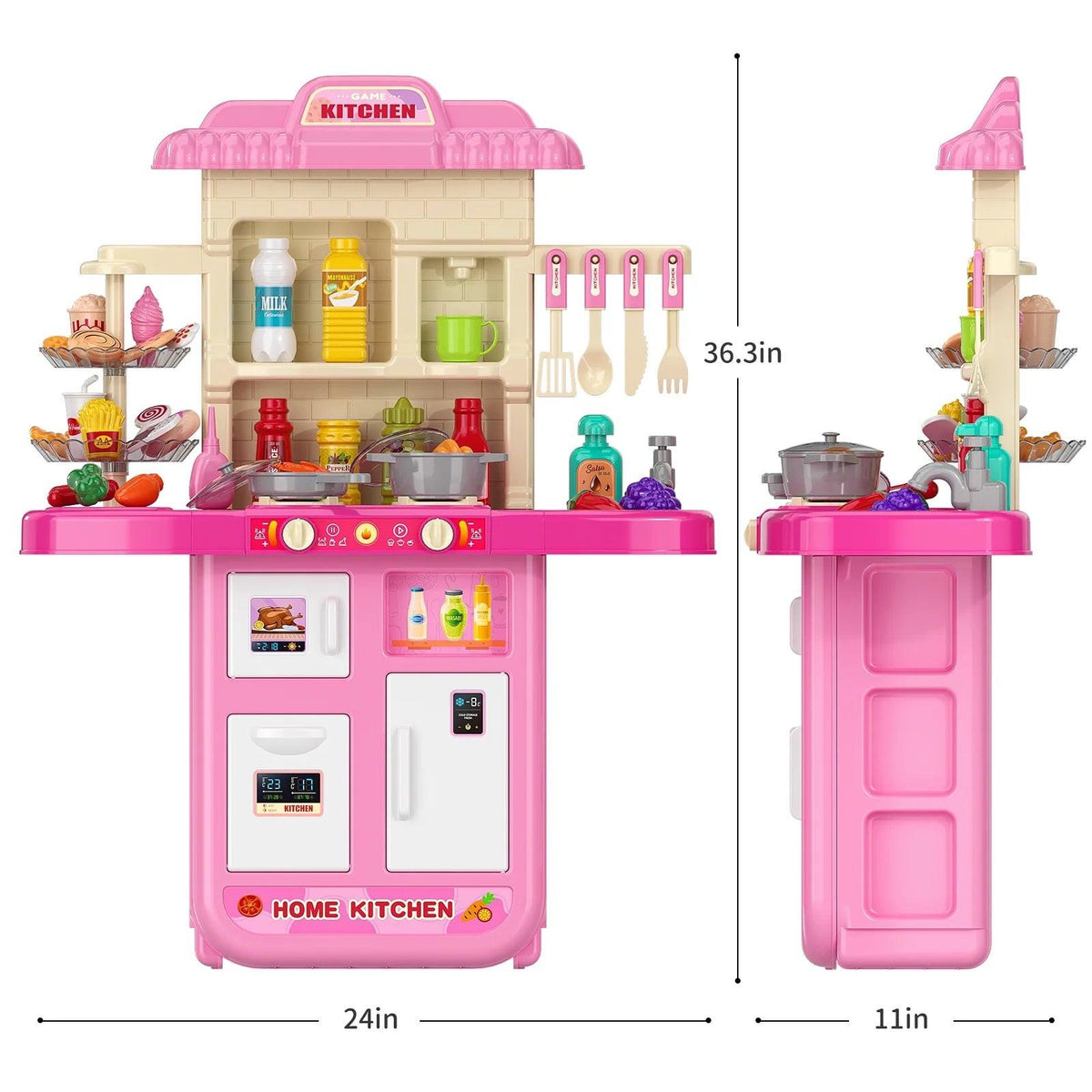
A current product image lists approximate assembled dimensions of 36.3 inches high, 24 inches wide, and 11 inches deep. Allow additional clear space in front of and around the kitchen so children can stand, move, open doors, and use accessories comfortably.
Measure the intended location before ordering and review the latest product images in case specifications change.
How can pretend kitchen play support learning?
Pretend kitchen play can give children opportunities to practice storytelling, communication, sorting, counting, and sequencing. Individual experiences vary, but parents can introduce simple activities that connect play with familiar routines.
- Count pieces of pretend food or place settings.
- Sort utensils, plates, and food by type or color.
- Follow a simple sequence such as prepare, cook, serve, and clean.
- Create a menu for a pretend restaurant or cafe.
- Practice taking turns while playing with another child or adult.
How can you make a play kitchen more fun?
Changing the story can keep the same kitchen interesting. Instead of using it only for cooking, children can turn it into a bakery, restaurant, cafe, grocery counter, cooking school, or birthday-party kitchen.
Parents can introduce a new theme, ask the child to prepare a pretend meal, or invite stuffed animals as restaurant customers. These small changes create variety without requiring a completely new toy.
Is a play kitchen a good birthday or holiday gift?
A play kitchen can be a memorable gift for a child who enjoys pretend cooking, household role-play, or organizing accessories. Before buying, consider the child’s age, the available play area, assembly time, and whether the included features match the child’s interests.
Adult assembly is required for the featured set. Follow the instructions supplied with the product and check that all parts are secure before play.
Where can you buy a pink play kitchen for toddlers?
You can shop the Pink Pretend Play Kitchen at Kids Blooms. The current listing includes lights, sounds, a pretend water feature, play accessories, and storage and role-play areas for children ages 3 and up.
For more pretend-play products and children’s toys, browse the Kids Blooms Toys & Playtime collection.
Frequently asked questions about play kitchens
What is the best play kitchen for a toddler?
The best choice is age-appropriate, fits the available space, and offers features that match the child’s interests. Parents should compare the manufacturer’s guidance, accessories, assembly requirements, and product dimensions.
What age is a play kitchen good for?
Age recommendations vary by product. The featured Kids Blooms play kitchen is recommended for ages 3 and up and contains small parts. Always follow the instructions and warnings supplied with the specific set.
Does a play kitchen need real water?
No. Children can enjoy pretend cooking without water. A supervised pretend water feature simply adds washing and cleaning activities for children who enjoy that type of role-play.
What accessories should a play kitchen include?
Useful options can include pretend food, cookware, plates, cups, and utensils. The right selection depends on the child’s age and preferred activities. Review current product images to confirm what is included.
How much room should you leave around a play kitchen?
Leave enough space for the child to stand in front, move safely, open any doors, and reach the main play areas. Measure both the product footprint and the surrounding play space before ordering.
Do play kitchens require adult assembly?
Many larger sets do. The featured Kids Blooms kitchen requires adult assembly and supervision. Follow the supplied instructions and check the assembled product before use.
Final thoughts
Choosing a play kitchen is easier when you focus on age guidance, available space, useful accessories, interactive features, and the activities the child already enjoys. A well-matched set can support many kinds of supervised pretend play, from cooking and serving to organizing and cleaning.
Review the current product page, images, instructions, and warnings before ordering. This helps ensure that the selected kitchen fits both the child and the intended play area.